A Kit Bag Is Not a Checklist: What to Leave Out
A kit bag is not a checklist: plan for the session you have, leave habitual extras at home, and keep the essentials easy to find.
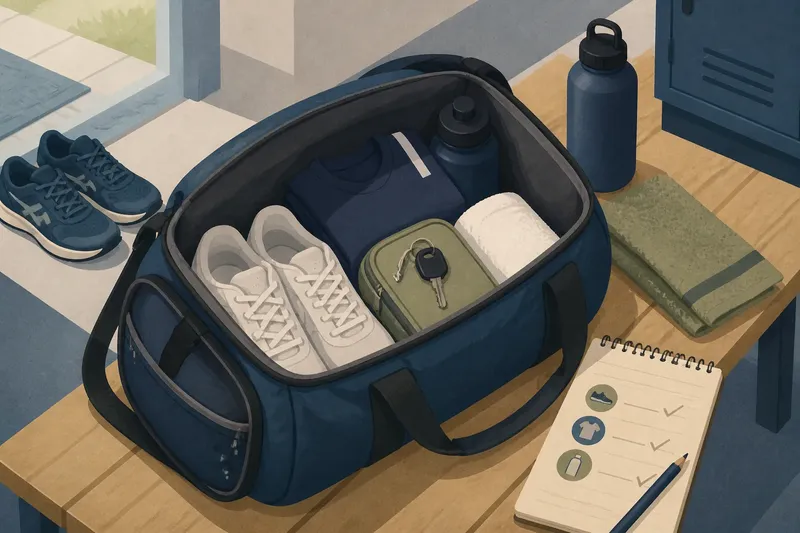
The most common kit-bag mistake is packing for every sporting possibility instead of the session on the calendar. A bag stuffed with spare layers, duplicate tools, snacks and “just in case” gear can hide the one thing you actually need, while turning a short trip to the court or pool into a rummage.
A kit bag is not a checklist to complete; it is a small working space for the day’s demands. The useful question is not “What might I use?” but “What will this session ask me to bring, and what can I reasonably get there?” A weekly routine makes that distinction easier, because most outings have a familiar shape.
Set a weekly baseline
Choose a regular moment each week—perhaps after checking your training schedule—to note the sessions ahead. For each one, write down its location, activity, duration in broad terms, and any special condition that changes what you carry. A neighborhood run, a pool visit and a club practice may share a bag, but they do not share identical needs.
Keep a short baseline list for the activity you do most often. A runner might need running shoes, suitable clothing, a key and a way to carry water if the route or conditions call for it. A swimmer’s baseline may instead include swimwear, a towel and goggles. Let the activity determine the list; don’t treat another athlete’s well-stocked bag as a standard.
Then separate items into three simple groups:
- Session essentials: items needed to take part, such as the correct footwear, uniform or personal equipment.
- Condition-dependent items: gear that matters only for a particular venue, forecast, surface or session format.
- Habitual extras: things carried from outing to outing without a clear reason for that day.
The third group is where a bag quietly grows. A spare shirt can make sense after an outdoor session in wet weather; it may be dead weight for a brief indoor practice with a changing room nearby. Keep the distinction flexible rather than turning it into another rigid rule.
Before each outing
On the evening before, or when you usually prepare, look at the actual session rather than packing on autopilot. Check the venue information, the coach’s message or the activity organizer’s notes if they affect what participants need. Consider the route to the venue too: walking, cycling or public transit can make bulky extras less appealing than they would be beside a car.
Ask three questions while you pack: What is required to participate? What condition could change that answer? What can I access at the venue or leave safely at home? These prompts help distinguish useful preparation from anxiety disguised as preparedness.
Place essentials together in a consistent part of the bag, such as a shoe compartment or a small pouch. Put condition-dependent items beside them only after you have identified the reason. If your bag has no compartments, a simple cloth pouch can keep small items from disappearing among clothing. Think of the bag like a kitchen drawer: a few tools you reach for often belong near the front; a second duplicate of everything does not.
Adjust for the session
For an indoor session, check whether the venue provides equipment, changing space or water access before bringing your own versions. That does not mean assuming every facility is alike; it means letting the specific venue answer the question. If you are unsure, ask the organizer rather than packing several substitutes.
For an outdoor session, let the forecast and the activity guide any extra layer or protective item. A light shell may be sensible for a walk to an exposed field, while a bulky change of clothes may not be. The aim is not to predict every turn in the weather. It is to respond to the conditions that are plausible for the planned outing.
For shared equipment, confirm who is bringing what. If a club supplies balls, cones or rackets, carrying a personal duplicate may add weight without improving the session. Personal fit, hygiene or comfort can still make your own item worth bringing; decide based on the actual arrangement, not a general assumption.
Say you have a weekday practice at a local gym after work, and you usually carry a second pair of shoes, a full change of clothes and a large snack. If the gym has a changing area, the practice requires only your training shoes and shirt, and you can eat before leaving, you might pack those essentials and a small pouch for your key instead. The observable result is a lighter bag with fewer things to search through, while the session still has what it calls for.
After you return
Make a brief reset part of coming home. Remove damp clothing, return reusable gear to its usual place and note anything that needs washing or replacing. This is not a cue to restock every pocket. Refill only what you used or what the next scheduled activity requires.
If an item stayed untouched across several outings, ask whether it belongs in the bag at all. Keep it if it addresses a recurring, specific need; otherwise store it where you can retrieve it when conditions call for it. An emergency item or personal necessity may deserve a place even when rarely used, but give that choice a clear reason rather than letting every old addition linger by default.
Once a week, review the upcoming schedule and remove gear tied to sessions that have passed. A bag used for different sports may need a small core of shared items plus activity-specific pouches, but avoid leaving every sport’s kit packed at once. The next outing, not the whole season, is the unit you are preparing for.
Questions before packing?
What belongs in a basic kit bag?
Start with what lets you participate: activity-appropriate clothing, footwear and personal equipment that the session requires. Add only items justified by the venue, conditions or your own needs.
Should I pack a spare outfit?
It depends on the activity, weather, changing arrangements and journey home. If a change will solve a likely comfort or practical problem, include it; if it is simply a permanent habit, reconsider.
How do I stop my bag becoming cluttered?
Reset it after each outing, remove used clothing and return gear to its home. Before the next session, pack from the schedule rather than topping up every pocket.
What if I am unsure what the venue provides?
Check the venue’s information or ask the organizer about equipment, changing space and access to water. For item-specific requirements, follow the relevant label, manufacturer instructions or local rules.
A well-packed kit bag is not the fullest one; it is the one that matches the next session without making you carry old decisions along for the ride. Keep the main search phrase—kit bag—tied to that simple habit: prepare for the outing in front of you, then let the rest stay home until it has a reason to come along.